
Follow Us:


School vs Real-Life English
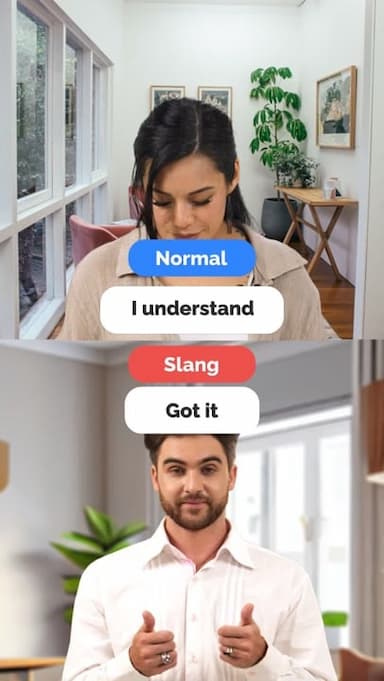
Many English learners struggle because what they learn in school often sounds formal or unnatural in real-life conversations. This video shows the difference between school English and expressions commonly used by native speakers in daily life.
For example, instead of saying I’m very tired, real-life English speakers say I’m beat. I’m very happy becomes I’m stoked, and I’m very sad changes to I’m bummed out. Similarly, I’m angry becomes I’m pissed, I’m nervous is I’ve got the jitters, and I’m surprised turns into I’m shocked. These expressions are casual, natural, and widely used in everyday conversation.
Using real-life English expressions not only makes your speech sound more native, but it also helps you understand movies, TV shows, and social interactions more easily. Practicing these phrases will improve your listening skills and boost your confidence when speaking with native speakers.
By learning the differences between school and real-life English, you can sound more fluent and relatable. These phrases allow you to express emotions naturally while keeping conversations casual and engaging, helping you communicate effectively in real-world situations.
Get the full app experience
Engaging video lessons and fun quizzes to help you ace your English.
Improve your English Level
Improve your pronunciation
Practice conversations
Sharpen your listening Skills
Fix common mistakes in English
Learn Grammar in a fun way
Expand your English Vocabulary

Coming soon to Google Play










© 2023 fluentjoy.com
Download FluentJoy App: